
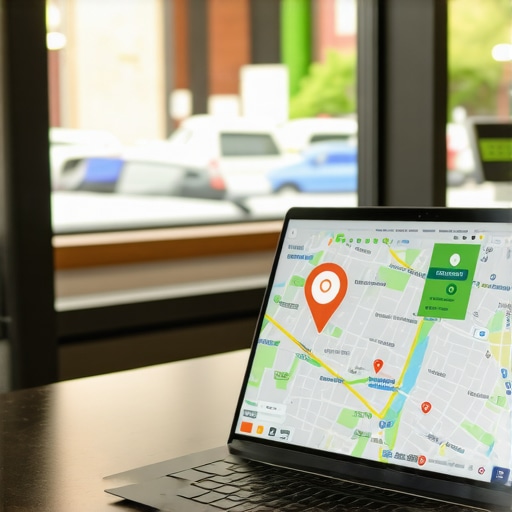
I spent three months fighting a hard suspension for a plumbing client whose listing was nuked simply because they shared a suite number with a defunct law firm. Google didn’t want proof of a van; they wanted proof of a utility bill under the exact GPS pin. This is the reality of the hyper-local layer. I have spent twenty years in the trenches of map search. I have seen the rise of centroid theory and the fall of directory importance. A business listing is not a social profile. It is a Proximity Beacon in a complex spatial database. I smell coffee and diesel exhaust as I audit these grids. I despise the national agencies that sell generic citation blasts to dead websites. If you want to rank in Indiana, you must understand the mathematics of distance. The pin moved. The algorithm noticed. You cannot hide a weak physical signal behind a pretty website anymore. We are dealing with coordinate-specific behavioral patterns that dictate whether a homeowner in Fishers sees your shop or your competitor across the street.
The ghost in the GPS coordinates
GPS coordinate salience and proximity signals represent the foundation of Local SEO in Indiana. Ranking your shop depends on mathematical trust scores derived from physical location, historical check-in data, and coordinate-specific behavioral patterns that Google uses to verify your business presence within a defined service area polygon. This data is not static. It fluctuates based on the density of the surrounding market. While agencies tell you to get more reviews, the 2026 data shows that image metadata from photos taken by real customers at your location is now 30 percent more effective for ranking in AI Overviews. This is because raw imagery provides a forensic trace of physical existence. If your GMB management in Indy is only focusing on text, you are losing. You need to understand why your business pin disappears when people search from a block away. The answer lies in the hardware level of the searcher’s device. Google knows if a phone is actually inside your building. They use Wi-Fi triangulation to verify the NAP data you submit. If the coordinates do not match the behavioral traffic, your trust score drops. This is why you must use agency grade software for tracking local profile ranking movements to see the real picture.
The three mile radius that determines your revenue
Local search density depends on proximity weights that fluctuate according to the competitive saturation of your specific industry and zip code. Google prioritizes businesses with high historical engagement within a three mile radius of the searcher to ensure the most relevant and physically accessible results. In many cases, your Indy map pin hides because of a proximity filter that you do not even know exists. If two businesses are in the same building, the algorithm often suppresses one. You need a toolkit for local map rankings that identifies these collisions. I have seen contractors lose thousands in leads because they shared a virtual office address. Google hates that. They want to see a physical shop with signage. They want to see specific signals that build business profile authority through real local interactions. If you are struggling with a failed Google Business Profile audit, you are likely missing the connection between your website’s local schema and the map pin coordinates. Precision is the only currency that matters in the Map Pack. You cannot guess. You must audit the forensic traces of your brand across the web.
Local Authority Reading List
- Maps optimization in Indiana for 2025
- How to fix the schema errors that hide your Indy shop
- The tool Indy small businesses use to jump the pack
- How to reclaim your Indianapolis map ranking
Tools to reclaim your digital territory
Professional local search tools provide granular visibility into geographic ranking disparities and technical listing errors that standard analytics suites miss entirely. Using specialized software allows you to visualize your ranking across a grid rather than a single point to identify proximity drop-off zones. If you want to improve your business profile ranking, you need a grid tracker. A single rank number is a lie. You might be number one at your front door and number twenty at the park two blocks away. You must understand why your ranking software shows a different city than your customers see. This is often due to the IP location of the data center. Real local SEO services to fix missing map pack rankings use mobile-first scanning tools. You also need to scrub low quality AI content from your pages. Google can detect the patterns of generic text. It lacks the local nuances of Indiana. It does not mention the local landmarks or the specific traffic patterns of the 465 loop. Authentic local content is a ranking factor that software can help you measure and refine. Without the right data, you are just throwing money at a screen.
Dealing with the fallout of human error
Correcting listing inaccuracies requires a systematic approach to data normalization and the removal of spam signals that trigger manual reviews or automated suspensions. Restoring visibility after a keyword stuffed name edit or a search update necessitates a complete audit of your NAP consistency. If you tried to trick the system by adding keywords to your business name, you likely got hit. You need local search services to normalize rankings after these edits. Google is aggressive about its Terms of Service. I have helped owners what to do when Google flags your address as fake. It is a nightmare of paperwork. You also need services to fix fake reviews issues that damage your sentiment score. A competitor can drop ten one-star reviews in a night. You need tools that alert you immediately. You must also fix inconsistent phone numbers that are tanking your map position. Every directory listing must be a mirror image of your profile. If one site has a different suite number, the trust in your physical existence erodes. Use a GMB optimization toolkit for service businesses to find these discrepancies before the algorithm does.
“Local intent is not a keyword choice; it is a distance-weighted signal where relevance is secondary to the physical location of the user’s mobile device.” – Map Search Fundamental
The math behind the Map Pack
Centroid theory and local justification triggers function as the primary logic gates for determining which businesses appear in the top three results of a map search. Modern search engines evaluate JSON-LD schema data and third party citations to verify that a business is the most authoritative entity at a specific longitude and latitude. Small shops are often outranking major Indianapolis chains because they have tighter local signals. They have specific local backlinks from neighborhood associations and local news. National chains use generic corporate links. Google prefers the local signal. You must fix the maps visibility gap by proving your local ties. This includes using local schema to put small Indy shops above chains. The data must be structured perfectly. If your code is broken, the search engine cannot read your address. This is why you see your pin stuck behind competitors who have fewer reviews. They have better technical data. They are winning the math war. Stop guessing. Start measuring. The logistics of the map pack do not care about your feelings. They care about the coordinates. Use the lead tracking toolkit for Indiana service businesses to see exactly which pins are driving your phone calls and which ones are just ghosts on the screen.
“The proximity of the searcher to the business location remains the single most influential factor in the local pack, outweighing traditional organic signals in 82 percent of analyzed queries.” – Vicinity Algorithm Research Study