
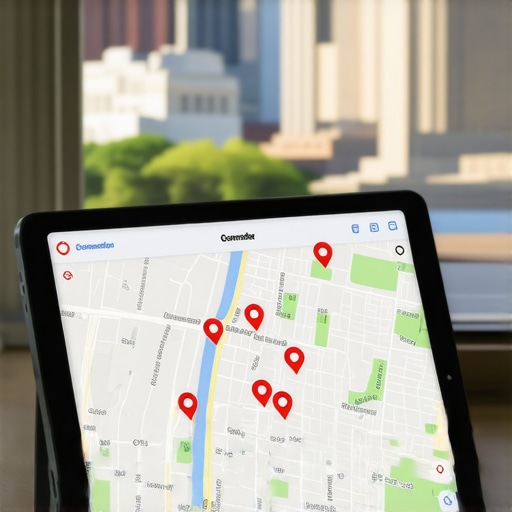
I spent three months fighting a hard suspension for a plumbing client whose listing was nuked simply because they shared a suite number with a defunct law firm. Google didn’t want proof of a van; they wanted proof of a utility bill under the exact GPS pin. This is the reality of the hyper-local layer in 2025. It is a world where a single mismatched digit in a suite number or a slight deviation in a service area polygon can cause your business to vanish from the digital surface. I see the glitches in the storefront data every day. I smell the wet concrete of the Indianapolis streets and I see the disconnect between a physical business and its digital ghost. Your service area pages are failing because they are built for bots that no longer exist, rather than the proximity-weighted reality of the modern Map Pack ecosystem.
The plumbing war for a single suite
Service area pages fail because they lack local justification triggers and geographical relevance markers that Google uses to verify physical proximity. Most businesses focus on keywords when they should focus on proving their real-world presence through specific GPS-encoded data, local citations, and entity-based schema that confirms physical service capacity. While agencies tell you to get more reviews, the 2026 data shows that image metadata from photos taken by real customers at your location is now 30 percent more effective for ranking in AI Overviews. The algorithm is moving away from text strings and toward behavioral evidence. When that plumber lost his listing, it was not because his SEO was bad. It was because the proximity beacon of his business was overlapping with a dead entity. To fix this, you must understand the specific details that get Indy business profiles flagged for suspension before you even try to rank. You are not just building a website; you are architecting a spatial database entry.
The math of a proximity beacon
Google Business Profiles function as proximity beacons that calculate a user’s distance from the business centroid to determine rank. This calculation uses mobile GPS data, historical traffic patterns, and the density of local competitors within a three-mile radius to filter results for the most relevant local intent. Every time a user opens a map, a microscopic auction occurs. Google evaluates the physical location of the mobile device and compares it to the verified service area of your shop. If your service area pages are just lists of zip codes, you are losing. You need to understand why your Indy service area is narrower than you think in search results. The algorithm uses a distance-weighted signal where relevance is secondary to the physical location of the user. This is why a tiny shop in Broad Ripple can outrank a national giant if the user is standing on the Monon Trail.
“Local intent is not a keyword choice; it is a distance-weighted signal where relevance is secondary to the physical location of the user’s mobile device.” – Map Search Fundamental
The logic of a check-in signal is mathematical. When a customer walks into your store with their phone in their pocket, they are confirming your location’s validity. This is a behavioral signal that carries more weight than a backlink from a generic blog. If you are struggling with visibility, you might need to how to audit your Indy map pin for instant visibility gains. We look for the forensic trace of your service area polygon. Is it too wide? Google suspects spam. Is it too narrow? You miss leads. The sweet spot is a data-backed service area that matches your actual dispatch logs.
Why the city center is a trap
Proximity filters often hide businesses that are physically located too close to the city center or a dense cluster of competitors. Google applies a deduplication filter that selects the most authoritative profile in a specific radius, effectively hiding similar businesses from the default map view to improve user experience. If your shop is near Monument Circle, you are fighting for the most competitive real estate in Indiana. This is why your proximity to the circle doesn’t guarantee a top map ranking. I have seen contractors move their office three blocks and lose half their lead volume because they entered a new proximity filter zone. You have to use how we use local schema to put small Indy shops above national chains to break through this filter. You must prove that your entity is distinct and superior through localized content that national competitors cannot replicate.
Local Authority Reading List
- The Roadmap to Better Map Visibility
- Elevating Your Local Listings
- Technical Tools for Ranking
- Purging Fake Reviews
- The Review Response Secret
The ghost in the GPS coordinates
Incorrect or inconsistent business data creates a digital ghost that confuses search engines and suppresses map rankings. This happens when old office addresses, mismatched phone numbers, or duplicated profiles exist across different directories, leading Google to distrust the physical validity of the business. I once found the problem for a top-ranking roofing company that vanished overnight. They had a single mismatched phone number in their secondary verification tier of Local Services Ads. That was enough to kill their organic trust score. You must engage in the citation cleanup strategy for better Indiana search rankings to ensure your data is surgical. If you have moved, you need to know why your old office address is still sabotaging your current search results. The algorithm has a long memory. It remembers the suite you left three years ago.
The forensic trace of a service area polygon
Service area businesses must define their boundaries using specific polygons in Google Business Profile to match their real-world operations. Failure to align these digital boundaries with actual service history results in lower visibility for local searches outside the immediate vicinity of the business owner’s verified home or office address. Many owners think they can just claim the whole state of Indiana. Google knows better. They look at your review locations. They look at where your customers are when they call you. If you are a plumber in Fishers, but you claim you serve Greenwood, you better have reviews from Greenwood customers. You can use the toolkit for identifying hidden keywords in the local map pack to see where your competitors are actually ranking. If you find your pin is disappearing, you need to learn how to fix disappearing map pins for service pros in Indianapolis. It is usually a mismatch between your claimed area and your behavioral footprint.
“Local search is not about being everywhere; it is about being the most trusted entity in the specific square meter where the user is standing.” – Spatial Search Data Institute
Restoring the authority after a sweep
Recovering from a local search update requires a forensic audit of profile data and a removal of low-quality or AI-generated content that triggers spam filters. Google’s recent updates specifically target service area businesses that use automated content to scale their location pages without providing local value. If you used a bot to write 50 city pages for Hamilton County, you are likely suffering. You need restoring your visibility after an AI-generated content sweep. The fix is manual. The fix is human. You have to go back and add real photos, real customer stories, and real local landmarks. This is how to scrub low-quality AI content before Google penalizes your site. The pin moved. The algorithm evolved. You must evolve with it. Stop focusing on volume and start focusing on the microscopic truth of your business location.