Why Your Indy Map Ranking Looks Different on Your Phone Than Your Customer’s
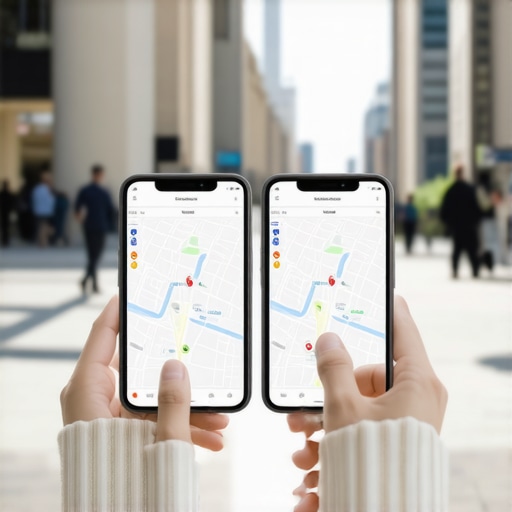
It is a scenario every business owner in the Circle City has experienced. You are sitting in your office on North Meridian Street, you pull out your phone, and you search for your primary service. To your delight, your business appears at the very top of the Google Map Pack. You assume your google business profile seo is firing on all cylinders. However, a potential client in Fishers, a homeowner in Greenwood, or a legal firm in Carmel performs that exact same search and your business is nowhere to be found – buried on page two or three of the local results. This phenomenon, often referred to as “ghost rankings,” is one of the most frustrating aspects of local digital marketing.
The reality is that Google Maps is not a static directory; it is a dynamic, living ecosystem that changes based on the user’s precise physical coordinates. According to recent research, approximately 76% of all local searches occur on mobile devices, where GPS precision is at its highest. This means that Google isn’t just looking at your city; it is looking at the specific city block where the searcher is standing. If you want to rank google business profile listings effectively across the entire Indianapolis metropolitan area, you have to understand why these discrepancies happen and how to bridge the geographical gap.
The “Proximity Trap”: Why Your Office Location Isn’t a Guarantee
In the world of local search, proximity is often the most misunderstood factor. Many business owners believe that if they have a physical office in a high-traffic area, they will naturally dominate searches in that vicinity. This is what we call the “Proximity Trap.” While Google officially identifies proximity as one of the three core local ranking factors, it is often the one that limits a business the most if they rely on it too heavily.
For example, having an office right on Monument Circle gives you a massive advantage for anyone searching for your services while walking through Downtown Indianapolis. However, your proximity to the circle doesn’t guarantee a top 3 map ranking when a user is searching from the Hamilton Town Center in Noblesville. Google’s primary goal is to provide the most convenient and relevant result to the user. If there is a competitor three miles closer to that user in Fishers, Google will likely prioritize them – unless your profile is significantly more “prominent” or “relevant” than theirs.
Proximity is essentially a “soft” filter. It creates a radius around your physical address. Within the first mile, you are king. At three miles, you start to see competition. At ten miles, without advanced google maps ranking service strategies, your visibility often drops off a cliff. This is why a law firm on the south side might wonder why they aren’t getting calls from Zionsville; the physical distance is simply too great for proximity alone to carry the weight of the ranking.
The Three Pillars of Google Maps Ranking
To understand why your rankings shift as you drive down I-465, we have to look at the math behind the Map Pack. Extensive research from MapLift has broken down the weight of the Google local algorithm into three distinct pillars. If you want to rank higher on google maps, you must balance these three factors:
- Proximity (~15%): This is the distance between the searcher and the business. While it is the most immediate factor, it actually carries the least amount of weight in the overall long-term algorithm.
- Relevance (~25%): This is how well your google business profile seo matches the intent of the searcher. Does your profile, website, and secondary categories clearly state that you provide exactly what the user is looking for?
- Prominence (~60%): This is the “authority” of your business. It is determined by your review count, your backlink profile, local news mentions, and how often Google sees your business name mentioned across the web.
The MapLift research is clear: “Proximity accounts for only about 15% of the ranking algorithm – prominence (60%) and relevance (25%) carry much greater weight.” This is the secret to expanding your reach. If your prominence is high enough, you can “out-rank” a competitor who is physically closer to the searcher. This is how a premier med spa in Carmel can still show up for a user searching in Broad Ripple, even if there are three other spas closer to that user. They have simply built more digital authority than their local competitors.
Achieving this level of prominence requires a dedicated google business profile optimization strategy that goes beyond just filling out your phone number and hours. It involves a deep dive into local citations, high-quality Indiana-based backlinks, and a constant influx of user-generated content.
Why Rankings Shift Block-by-Block in Indianapolis
As we move further into 2026, Google’s “Neural Matching” capabilities have become incredibly sophisticated. Google no longer sees Indianapolis as one big market; it sees it as a “grid” of thousands of tiny search zones. This is why your ranking can be #1 on 86th Street but drop to #5 by the time you reach 96th Street.
When a user moves, their GPS coordinates update. Google’s algorithm re-calculates the Map Pack in real-time. If you are a plumbing company based in Castleton, your “relevance” is high for that area. But as the searcher moves toward Geist, Google may find another plumber whose profile has localized content specifically mentioning “Geist Reservoir” or “Waterfront plumbing services,” making them more relevant for that specific block.
To truly understand your market coverage, you cannot rely on a single manual search from your office. You need to use a google maps rank tracker. These tools allow you to see a visual “heat map” of your rankings across the city. You might see a sea of green (rankings 1-3) around your office, but as you look toward Brownsburg or Avon, the map might turn red (rankings 10+). This data is essential for identifying where your Indy Map Proximity Tweaks need to be applied to stop losing calls to competitors who are simply better at local geo-targeting.
Service Area Businesses (SABs) vs. Physical Storefronts
The proximity challenge is even more pronounced for Service Area Businesses (SABs), such as roofers, landscapers, or mobile locksmiths. Because these businesses often hide their home address to comply with Google’s terms of service, they lack a “fixed” proximity point that Google can easily verify to the public. This can lead to a steeper climb when trying to improve google maps rankings.
For an SAB in Indianapolis, Google relies heavily on the “Service Area” settings in the dashboard. However, simply selecting “Marion County” or “Hamilton County” isn’t enough. Google looks for “proof of service” in those areas. This comes in the form of reviews from customers in those specific zip codes and localized project pages on your website. Without these signals, Google defaults to a very tight radius around your hidden verified address.
If you are struggling with Maps Optimization Indiana, you must realize that Google is looking for consistency. If you say you serve Fishers, but all your reviews come from people in Speedway, Google’s “Neural Matching” will flag a relevance gap. To beat the proximity filter as an SAB, your digital footprint must match your stated service area perfectly.
How to “Beat” Proximity: Expanding Your Ranking Radius
Since you cannot move your office every mile to satisfy Google’s proximity filter, the only way to expand your reach is to over-optimize for Prominence and Relevance. Here are three high-level strategies to help your google business profile seo break out of its local bubble:
Strategy 1: Hyperlocal Content Clusters
Don’t just talk about “Indianapolis SEO” or “Indianapolis Plumbing.” Create content that mentions specific neighborhoods, landmarks, and local events. Mentioning your work near the Indianapolis Motor Speedway or your involvement in the Carmel International Arts Festival signals to Google that your relevance extends beyond your front door. This helps build the “Relevance” pillar of the algorithm.
Strategy 2: Localized Backlink Profiles
Generic backlinks from national sites are fine, but for local maps, a link from a neighborhood association in Irvington or a local news mention from WISH-TV carries significantly more weight. These “local signals” tell Google that the Indianapolis community recognizes you as an authority. This is a core component of any professional local seo services package.
Strategy 3: High-Velocity, Geo-Specific Reviews
Review velocity (the speed at which you gain reviews) and review diversity (the location of the reviewers) are critical. Encourage your customers to mention their neighborhood in their review. A review that says, “Best roofer in Noblesville!” is worth ten reviews that just say “Great job!” This provides Google with the “Prominence” and “Relevance” data it needs to rank you further away from your physical location.
Using a google business profile audit tool can help you identify exactly where these gaps exist. It can show you if your competitors are getting more reviews from specific zip codes or if their website has more local keywords than yours.
Conclusion: Stop Guessing and Start Tracking
The “ghost rankings” you see are not a glitch; they are the result of a highly sophisticated algorithm designed to prioritize the user’s immediate needs. If your google business profile seo is only optimized for your office chair, you are missing out on the vast majority of the Indianapolis market. Remember, what you see on your phone is not what your customer in the next township sees.
To truly dominate the local market, you need to transition from basic GMB Management Indy to a comprehensive strategy that focuses on building massive prominence. Initial improvements in local visibility usually take 30 to 60 days of consistent optimization, while significant jumps that “break” the proximity barrier often take 90 to 120 days of sustained effort. This is not a sprint; it is a marathon of authority building.
Stop guessing where you rank. Use professional local seo tools to get an unbiased, grid-based view of your market. If you are ready to expand your radius and start appearing in the Map Pack for customers across all of Central Indiana, contact Indianapolis Local SEO today for a custom audit. Let’s make sure that when your customers search, they find you – no matter which neighborhood they are in.
For more insights on local growth, check out our guide on Indianapolis SEO Strategies to stay ahead of the curve in 2025 and beyond.